
In a society where hectic schedules, junk foods and stress have become the order of the day, people are moving towards ancient wisdom in order to find some form of balance and recovery. Ayurveda is one of the time-tested systems; a holistic health system that developed in India more than 5,000 years ago. Compared to modern medicine where treatment is usually concerned with treating symptoms, Ayurveda tends to treat the cause of the illness, rather than treating the symptoms and ensuring that there is a balance between the body, mind, and spirit.
The blog discusses the real meaning of Ayurveda, its advantages in human life, dietary practices and how Ayurveda suggests to treat and improve such conditions as uric acid imbalance, migraine, piles, kidney problems, and psoriasis.
What is Ayurveda?
The word Ayurveda comes from two Sanskrit words:
- “Ayur” meaning life
- “Veda” meaning knowledge or science
So, Ayurveda literally means “the science of life.”
At its core, Ayurveda believes that health is achieved when there is a balance between three fundamental energies, known as Doshas:
| Dosha | Elements | Characteristics | When Imbalanced |
| Vata | Air + Ether | Movement, creativity, flexibility | Anxiety, dryness, constipation |
| Pitta | Fire + Water | Digestion, metabolism, energy | Anger, acidity, inflammation |
| Kapha | Earth + Water | Stability, strength, lubrication | Weight gain, lethargy, congestion |
Each person has a unique combination of these doshas, known as their Prakriti (body constitution). Ayurveda focuses on maintaining this natural balance through diet, lifestyle, herbal remedies, and mindfulness practices.
Why Ayurveda Still Matters Today
It should be noted that Ayurveda is becoming more popular globally despite the development of modern medicine. This is because it is an easy solution, has a preventive, individualistic, and natural approach to health.
Rather than posing what disease it is, Ayurveda poses:
What type of imbalance bothers you?
This change of mind-set is what renders Ayurveda not a treatment system, but a lifestyle philosophy.
Benefits of Ayurveda in Human Life
Ayurveda isn’t just about curing diseases—it’s about improving the overall quality of life. Here are some key benefits:
1. Focus on Prevention
Ayurveda emphasizes daily routines (Dinacharya) and seasonal practices (Ritucharya) to prevent illness before it starts.
2. Natural Healing
Most Ayurvedic treatments use herbs, oils, and natural therapies. This reduces the risk of side effects often associated with synthetic medicines.
3. Holistic Approach
It treats the body, mind, and emotions together, recognizing that mental stress often leads to physical illness.
4. Personalized Treatment
No two individuals are treated the same. Ayurveda considers your body type, digestion, lifestyle, and even emotional patterns.
5. Improved Digestion and Metabolism
According to Ayurveda, “All diseases begin in the gut.” Strengthening digestion (Agni) leads to better immunity and energy.
6. Stress Reduction and Mental Clarity
Practices like meditation, yoga, and herbal support help calm the mind and improve focus.
7. Long-Term Wellness
Instead of temporary relief, Ayurveda works toward sustainable health and balance.
Ayurveda Diet Plan: Eating According to Your Body
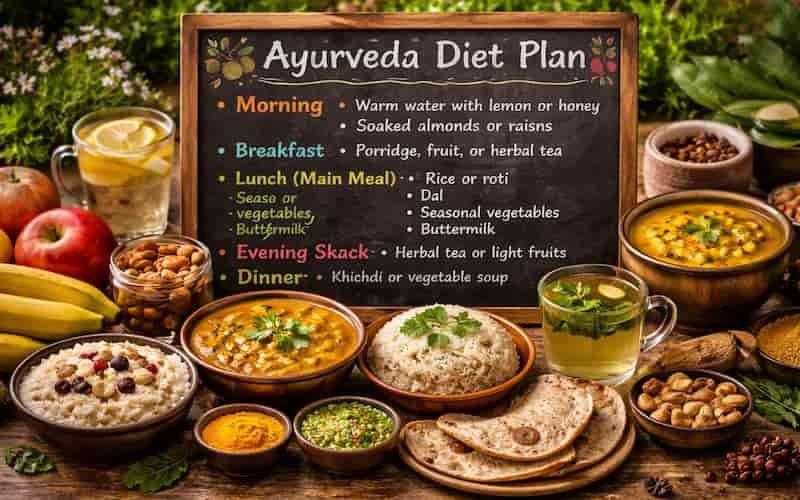
Food is considered medicine in Ayurveda. The right diet not only nourishes the body but also maintains dosha balance.
General Ayurvedic Eating Principles
- Eat fresh, warm, and seasonal food
- Avoid processed and stale items
- Eat according to hunger, not habit
- Include all six tastes: sweet, sour, salty, bitter, pungent, astringent
- Maintain regular meal timings
Dosha-Based Diet Guidelines
| Dosha | Recommended Foods | Foods to Avoid |
| Vata | Warm soups, ghee, nuts, cooked vegetables | Cold, dry, raw foods |
| Pitta | Cooling foods, fruits, leafy greens, milk | Spicy, oily, fried foods |
| Kapha | Light, warm, spicy foods, legumes | Heavy, oily, sugary foods |
Sample Ayurvedic Daily Diet Plan
| Time/Meal | Food Items |
|---|---|
| Morning (Empty Stomach) | Warm water with lemon or honey Soaked almonds or raisins |
| Breakfast | Porridge, fruit, or herbal tea |
| Lunch (Main Meal) | Rice or roti Dal Seasonal vegetables Buttermilk |
| Evening Snack | Herbal tea or light fruits |
| Dinner (Light Meal) | Khichdi or vegetable soup |
Ayurveda for Common Health Conditions
Ayurveda offers natural support for many chronic conditions. While severe cases should always be handled by a qualified practitioner, Ayurvedic methods can complement treatment effectively.
1. Uric Acid Treatment in Ayurveda
High uric acid levels can lead to joint pain and gout. Ayurveda links this condition to Vata imbalance and poor metabolism.
Natural approaches include:
- Drinking plenty of warm water
- Consuming bitter and astringent foods
- Avoiding red meat and alcohol
- Herbal support like Guduchi, Triphala, and Punarnava
This approach helps detoxify the body and improve kidney function.
2. Migraine Treatment in Ayurveda
Migraines are often associated with Pitta and Vata imbalance.
Ayurvedic remedies include:
- Nasya therapy (medicated oil through the nose)
- Shirodhara (oil poured on the forehead)
- Cooling diet with less spicy food
- Herbs like Brahmi and Ashwagandha
Ayurveda also emphasizes stress management, which plays a major role in migraine relief.
3. Piles Treatment in Ayurveda
Piles (hemorrhoids) are linked to poor digestion and chronic constipation.
Ayurvedic solutions:
- Increasing fiber intake
- Drinking warm water regularly
- Using herbs like Haritaki and Triphala
- Sitz baths and medicated oils
This approach focuses on improving bowel movement and reducing inflammation naturally.
4. Kidney Treatment in Ayurveda
Kidney health is closely tied to fluid balance and toxin removal.
Ayurvedic support includes:
- Herbs like Punarnava and Gokshura
- Reducing salt intake
- Drinking herbal decoctions
- Maintaining proper hydration
Ayurveda aims to enhance kidney function rather than just suppress symptoms.
5. Psoriasis Treatment in Ayurveda
Psoriasis is seen as a result of toxin buildup (Ama) and imbalance in blood purification.
Treatment methods include:
- Detox therapies like Panchakarma
- Blood-purifying herbs like Neem and Manjistha
- Avoiding incompatible foods (like milk + fish)
- Stress management
Ayurveda treats psoriasis by cleansing the body internally and calming the immune response.
Daily Ayurvedic Lifestyle Tips
Incorporating Ayurveda into your daily routine doesn’t require drastic changes. Small habits can make a big difference:
- Wake up early (preferably before sunrise)
- Practice oil pulling and tongue scraping
- Do light exercise or yoga
- Meditate for mental clarity
- Eat meals at fixed times
- Sleep early for proper rest
The Role of Detox in Ayurveda
Ayurveda places great importance on removing toxins (Ama) from the body. One of the most effective methods is Panchakarma, a set of five detox therapies.
These therapies help:
- Cleanse the digestive system
- Improve metabolism
- Boost immunity
- Restore dosha balance
Ayurveda vs Modern Medicine
| Aspect | Ayurveda | Modern Medicine |
| Approach | Holistic | Symptom-focused |
| Treatment | Natural remedies | Drugs & surgery |
| Focus | Prevention + cure | Mainly cure |
| Side Effects | Minimal | Possible |
| Personalization | High | Moderate |
Both systems have their place and combining them wisely can offer the best results.
Is Ayurveda Safe for Everyone?
Generally, Ayurveda is safe when practiced correctly. However:
- Always consult a qualified practitioner
- Avoid self-medication with strong herbs
- Inform your doctor if combining with allopathic treatment
Ayurveda works best when it is personalized and supervised.